Short answer: a short low-FODMAP approach may be worth testing in training for a runner who repeatedly gets gut symptoms, but it is not a universal marathon-carb-loading rule. Keep the carbohydrate plan adequate, change one variable at a time, and do not debut a restrictive menu on race weekend.
That distinction matters because “low FODMAP” is often reduced to a list of forbidden foods. The useful question for a runner is narrower: can a brief change in fermentable carbohydrates reduce your recurring exercise-associated symptoms without undermining the fuel you have practised? The current research is promising but small, and it does not show that every runner will race faster.

What the 48-hour study did—and did not—show
A 2024 randomized crossover study put 12 endurance athletes through two separate 48-hour high-carbohydrate diets before two hours of running at 60% VO₂max and a one-hour performance test. The diets differed in FODMAP content: the low-FODMAP version averaged 3.0 g/day and the high-FODMAP version 54.8 g/day, while both were high carbohydrate. That is a useful design because it tests the question runners actually face: whether gut comfort can be changed while carbohydrate remains high. Read the methods and results in the original study record.
It is still a study of 12 athletes under controlled conditions, not a green light to copy a menu without practice. A related six-day crossover trial in 11 runners found lower daily symptoms on the low-FODMAP diet, but no significant difference in symptoms during the running sessions. Its population already had a history of non-clinical exercise-associated gut symptoms, so it should not be generalized to a runner who normally feels fine. See the original randomized trial.
A 2024 systematic review reached a cautious version of the same conclusion: low-FODMAP, reduced-fibre/dairy strategies and carbohydrate gut-training may reduce gastrointestinal symptoms in endurance athletes, but the included evidence base is limited and a gluten-free diet is not supported simply as a symptom-prevention strategy. Read the systematic review before treating a trend as a rule.
Use the decision, not a food blacklist
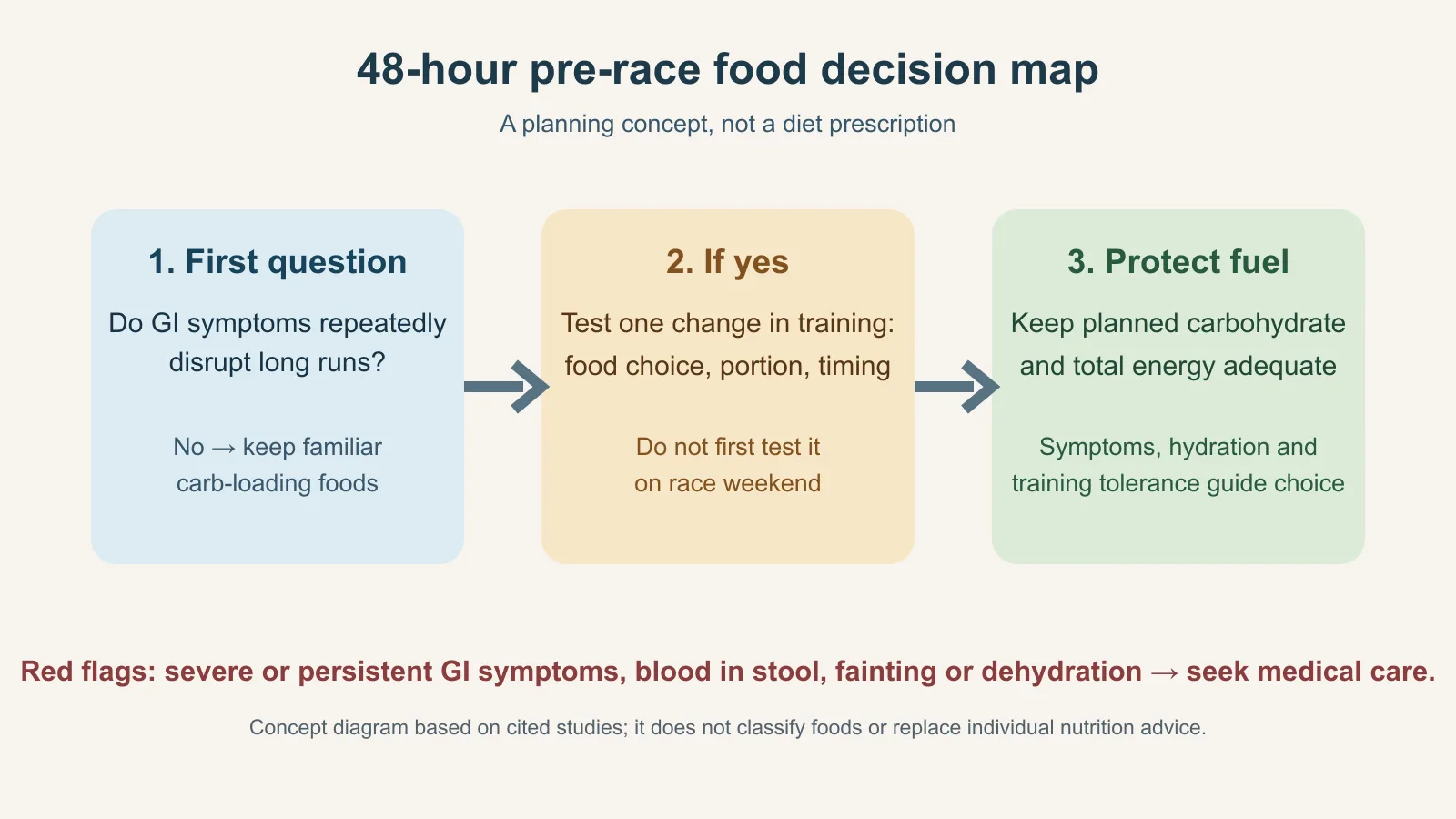
- Start with a pattern, not a hunch. For two or three comparable long runs, note the meal timing, foods, approximate carbohydrate, fluids, gels, intensity, heat and symptoms. A runner who has no recurring problem does not need a new restriction.
- Keep the test small. If a pattern repeats, trial one familiar low-FODMAP swap or a different portion/timing on an ordinary training weekend. Do not change food, gels, caffeine and hydration together; then you cannot tell what helped or hurt.
- Protect the actual race fuel. A lower-FODMAP experiment should not quietly turn into low energy availability or low carbohydrate. The aim is tolerance alongside the planned fuel target, not “eating clean.”
- Re-test the winning version. If comfort improves without compromising the session, repeat it once before considering it for a race. If it does not help, return to a familiar plan rather than escalating restrictions.
How this fits carb loading and gut training
Carb loading and FODMAP reduction solve different problems. Carb loading is about carbohydrate availability; a low-FODMAP trial is about possible symptom management. Our 36–48-hour carb-loading guide explains how to calculate a carbohydrate target. Keep that target separate from a decision about which familiar carbohydrate foods sit well for you.
Likewise, a pre-race menu cannot replace practising race-day intake. If gels or sports drink cause symptoms, use long runs to test the same product, concentration and intake rate you expect to use. Start with our guide to marathon gut training, then use the race-morning breakfast calculation to avoid accidentally shrinking the entire plan.
Three practical guardrails
- No first experiment at an A race. The available trials use controlled diets and selected athletes; they do not validate a last-minute personal protocol.
- Do not self-diagnose a gastrointestinal condition. Blood in stool, fainting, severe or persistent pain, repeated vomiting, marked dehydration, unintentional weight loss or symptoms outside running deserve medical assessment.
- Do not assume “gluten free” is the mechanism. The systematic review found no supporting studies for a gluten-free diet as a way to reduce endurance-exercise GI symptoms. If a food restriction is becoming broad or stressful, seek help from a sports dietitian rather than layering on more rules.
The usable takeaway
For a symptom-free runner, familiar food and a practised carbohydrate plan are usually the best pre-race strategy. For a runner with repeated, clearly logged gut trouble, a short, high-carbohydrate low-FODMAP test in training is a reasonable hypothesis—not a promise. Preserve fuel, change one variable, repeat the test, and bring only the version that survived training to the start line.


コメント