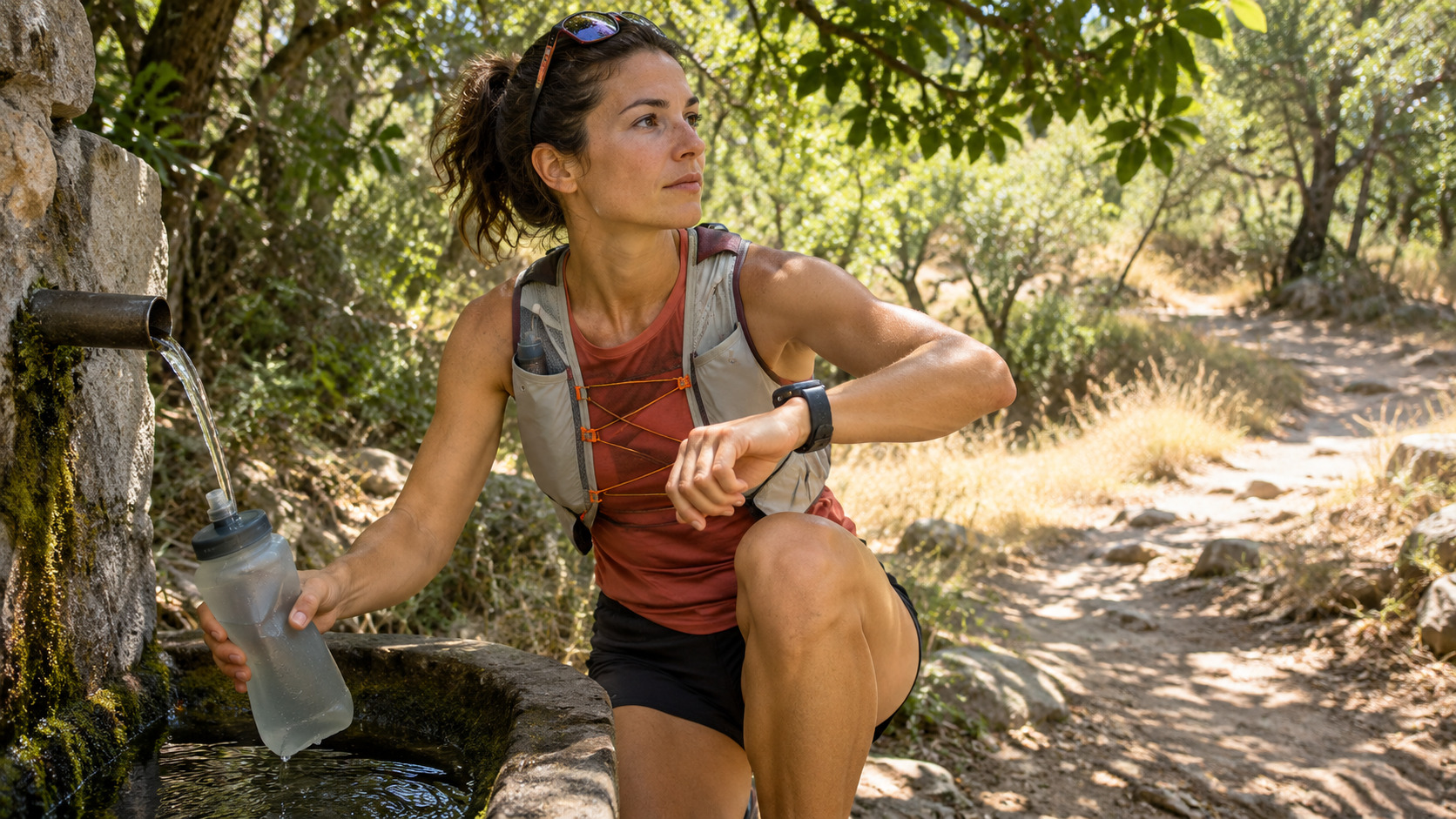
Hot-day trail running is not a test of whether you can tolerate discomfort. It is a route-and-exit decision made before the heat, terrain and distance compound each other. Build three options before you leave: go as planned, shorten to a shaded returnable loop, or stop and choose another session.
Check more than air temperature
Sun exposure, humidity, wind, terrain, water access, pace, acclimatisation and the time it will take to get back all change the load. A temperature reading at the car park does not describe a ridge at midday or a long climb without shade. Check the local forecast and alerts, then set a conservative route that has known turn points and water options.
Make the decision before the first climb
- Go: conditions match the plan, you can carry or access enough fluid, and you have a cool exit option.
- Shorten: forecast or recent heat exposure makes the original route a poor fit; choose a loop close to shelter, water or transport.
- Stop: dizziness, confusion, chills, an unusual inability to continue, or a change that removes your safe exit are reasons to stop the session and seek help as appropriate.
Use effort, not your usual pace
World Athletics notes that heat adds cardiovascular strain and recommends slowing down, choosing cooler times and paying attention to symptoms. Hydration matters, but it is not a guarantee against heat illness; changing pace, duration and location can be the safer intervention. For longer runs, test the carrying and drinking plan in training rather than improvising on race day.
For a related planning tool, see our hot-weather race decision guide.
Limits
Event-specific WBGT flags and rules belong to the organiser, while personal medical risk requires individual advice. This article is not a substitute for local heat alerts, race instructions or medical care.
Sources: World Athletics heat-training guidance; World Athletics Competition Medical Handbook.

コメント