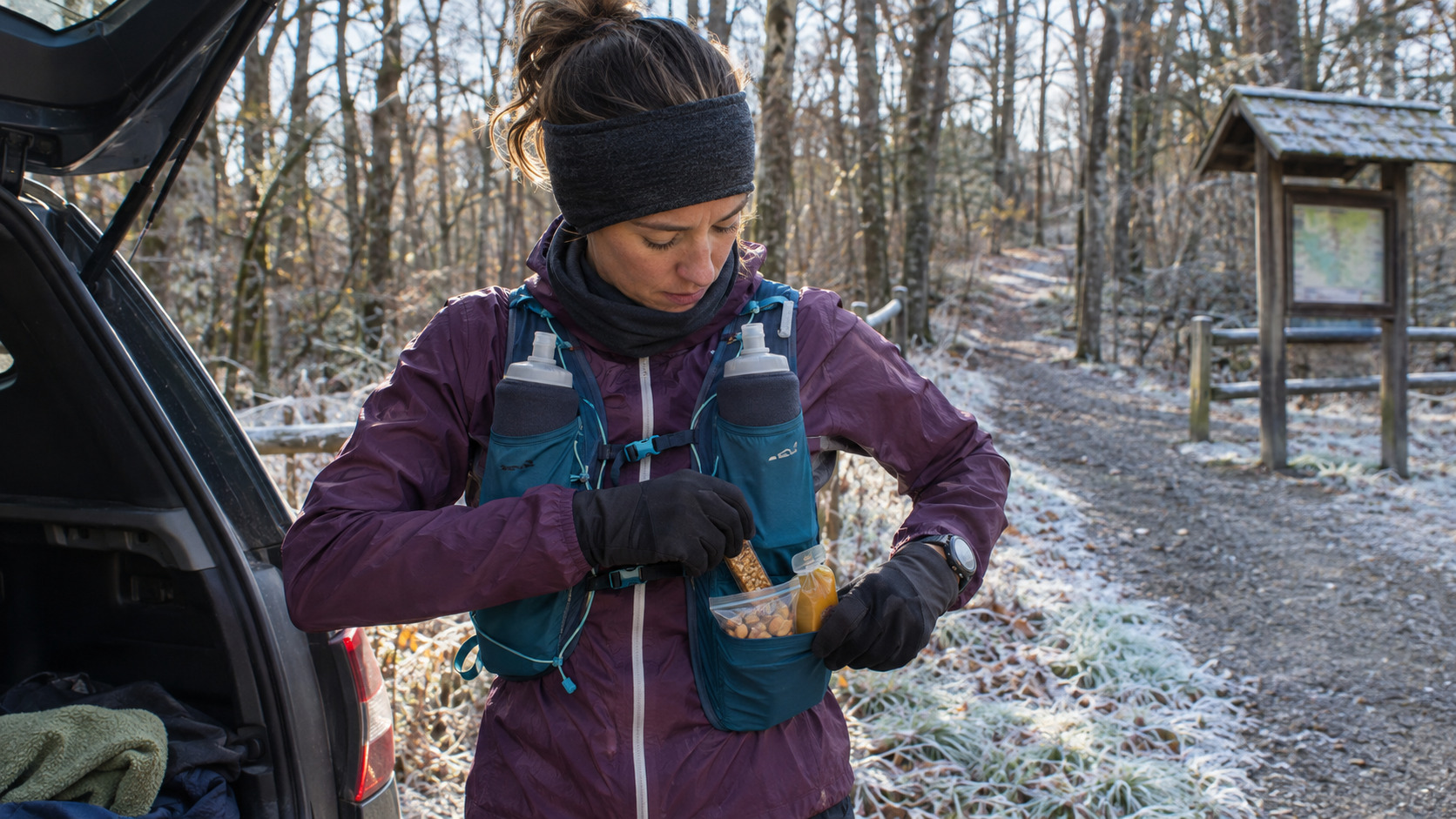
Cold weather can make a long-run fuel plan fail in ordinary ways: a gel is too stiff to open with gloves, a soft flask is hard to handle, a snack is buried under layers, and a short navigation stop becomes long enough to feel chilled. The answer is not to eat or drink to a universal schedule. It is to make the plan usable with cold hands, real stops and the distance back to warmth in mind.
Separate access from quantity
Start with the fuel and fluid amount that you have already practiced for a comparable duration, then test access separately. Open one serving while wearing the gloves you expect to use. Place the first item where it can be reached without removing a vest or stopping in wind. If a bottle, cap or packet needs bare fingers, it is a planning problem even if the total volume looked right at home.
Build two small contingencies
- For a longer stop: keep one easy-to-handle carbohydrate source and an insulating layer available without unpacking everything.
- For a slower return: carry enough reserve to get back if footing, wind or navigation makes the route take longer than planned.
Do not treat thirst as the only cue. Cold weather can blunt the reminder to drink, while a rigid drinking rule can create a different problem. Use the conditions, your practiced plan and the route’s next reliable water/exit point to make small adjustments. In a long event, aid-station rules and available fluids matter as much as what you packed; this ultra-trail hydration planning guide explains how to build checkpoints without forcing intake.
Protect the return-to-warmth margin
The National Weather Service notes that hypothermia can occur in cool conditions when someone is wet or outside for a long time, and advises getting out of wet clothing promptly once indoors. For a trail runner, that means arranging dry layers and warm transport after the run, not merely packing calories. If shivering, poor coordination or confusion appears, do not try to solve it by continuing the workout. Shorten the route, seek shelter and use local emergency support when needed.
Run a one-minute rehearsal
- Open your first fuel with gloves on.
- Reach the first flask and layer while wearing the vest.
- Name the earliest exit point after the turnaround.
- Tell someone when you expect to be back and what changes that plan.
There is no universal cold-weather recipe. A plan that works with your hands, route and exit margin is more valuable than an ambitious number that only works in the kitchen.
Sources
National Weather Service: During Extremely Cold Weather; National Weather Service: Winter Weather Safety

コメント