Wind changes a trail run before it becomes a dramatic weather event. It can make route markers harder to see, turn a familiar ridge into a cold stop, and turn a simple clothing change into a coordination problem. A useful wind plan is not a target wind-speed number copied from another mountain. It is a decision made from your route’s exposure, forecast timing, exit options and the people on the day.
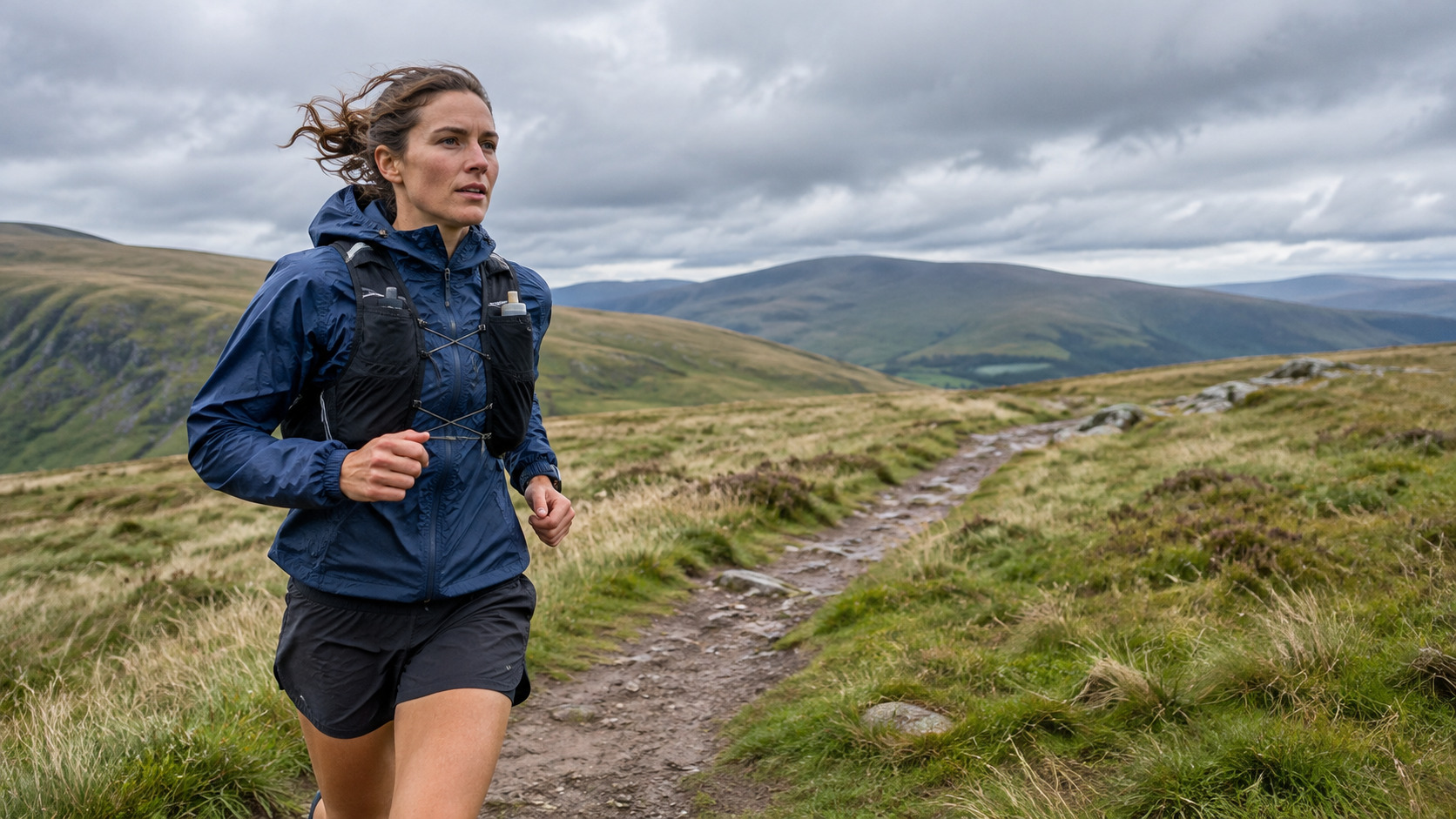
Map exposure before you map the miles
Mark the ridges, treeless ground, bridges, lakesides and high points where shelter disappears. Then mark a lower alternative and the last unambiguous junction before each exposed section. The key question is not “Can I keep moving?” but “Can I turn around and navigate comfortably if the wind increases while I am there?” A route with a shorter, sheltered exit can be the smarter long run.
Use a three-part pre-run check
- Forecast timing: Check the hourly forecast for the period you will reach exposed ground, not only the trailhead forecast.
- Clothing access: Put a wind layer, head covering and hand protection where you can reach them before you stop.
- Exit logic: Set a point where worsening gusts, poor footing or chilled hands means taking the lower route or returning.
Wind chill is a measure of heat loss from exposed skin, not a replacement for temperature. The National Weather Service emphasizes that increasing wind accelerates heat loss; wet clothing and a long stop can make the practical effect larger still. If a partner cannot manage a zip, phone or map with cold hands, that is already useful information for the next decision.
Change the route, not just your pace
Slowing down helps with footing, but it does not restore route visibility or shelter. Avoid committing to a narrow ridge, unprotected traverse or a point where a simple retreat becomes a long descent. In thunderstorms, lightning guidance takes priority: do not use a wind article to justify remaining in exposed terrain. For related planning, see our trail lightning turnaround guide.
When to turn back
Turn around when gusts materially change balance, when the route ahead cannot be evaluated from where you are, when cold hands impair basic tasks, or when the return route would become harder later. These are route-management signals, not a failure of toughness. Local warnings and land-manager restrictions always override a personal plan.
Sources
National Weather Service: Winter Weather Safety; National Weather Service: During Extremely Cold Weather


コメント