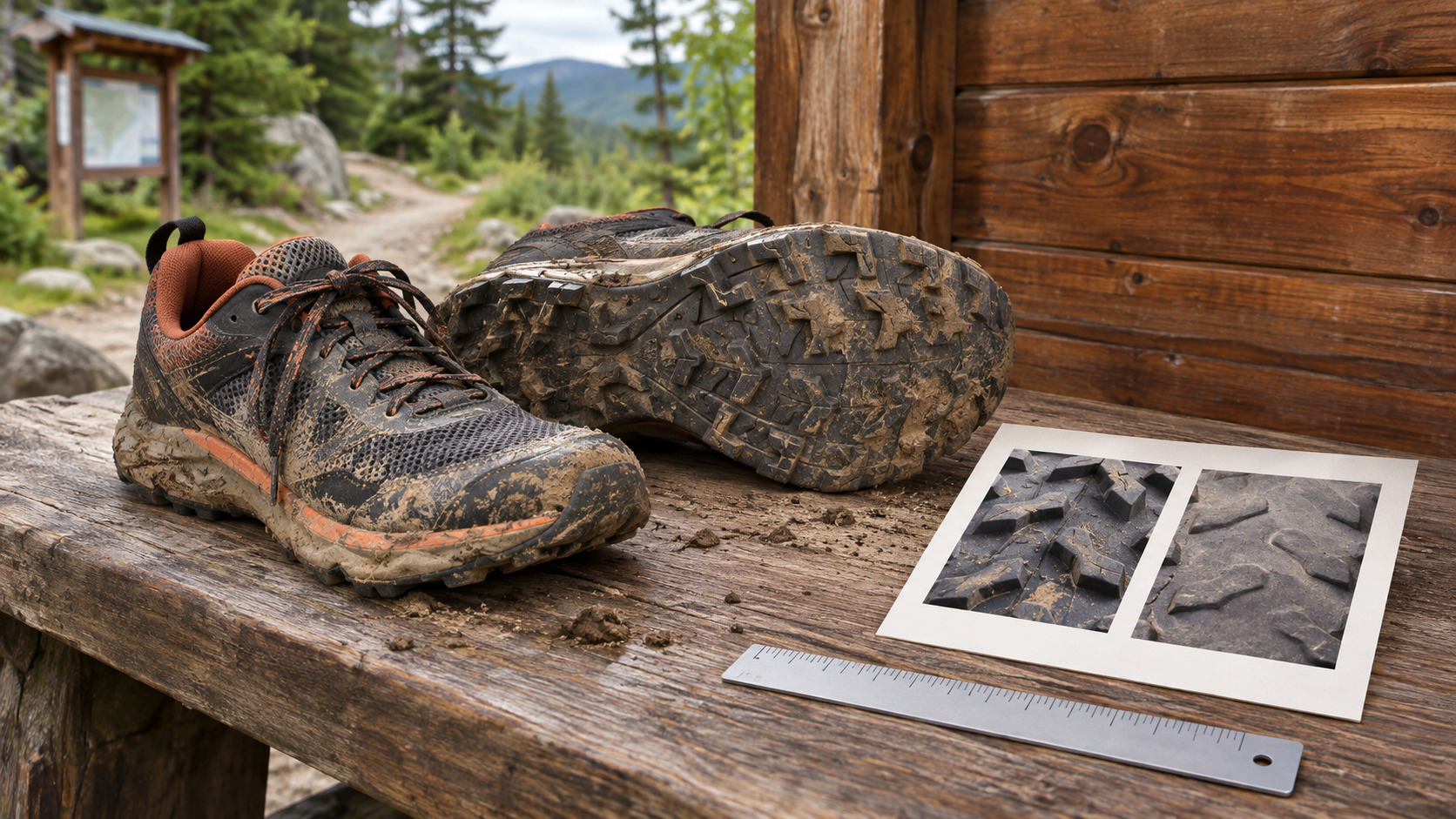
The featured image is an AI-generated editorial illustration. It is not a photograph of a real test, product or person.
There is no universal mileage number that tells every trail runner to replace a shoe. Terrain, body mass, wet storage, rotation and the shoe itself all change the answer. A more useful decision is a repeatable inspection: outsole grip, midsole feel, upper security and fit.
Start with traction, not a calendar
Clean the shoe, then compare the lugs at the usual braking and toe-off areas with less-used sections. Missing chunks, rounded lugs and torn rubber matter most when they reduce predictable braking or cornering on the terrain you actually run. If traction has become unreliable on wet rock or loose descents, a new pair may be a safety decision rather than a performance upgrade.
Then inspect the platform and upper
Look for a midsole that is permanently creased, tilted or uneven from side to side; check whether the heel counter, eyelets and overlays still hold the foot securely. A change in fit can matter before the foam looks dramatic. Re-test lacing and toe space on a short, familiar route rather than discovering a problem on a long descent.
Keep a comparison photo
Photograph the outsole when the shoes are new and at each wash. The photo is not a laboratory measurement, but it makes gradual wear easier to see. If a shoe is still structurally sound, it can remain useful for walking or easy dry paths; do not use that as a reason to take it onto terrain where its grip is no longer dependable.
Before race day
Do not debut a replacement shoe at an event simply because the old pair looks tired. Use the race-week choice framework in this guide to choosing the pair you know, then verify the organiser’s footwear and traction requirements.


コメント