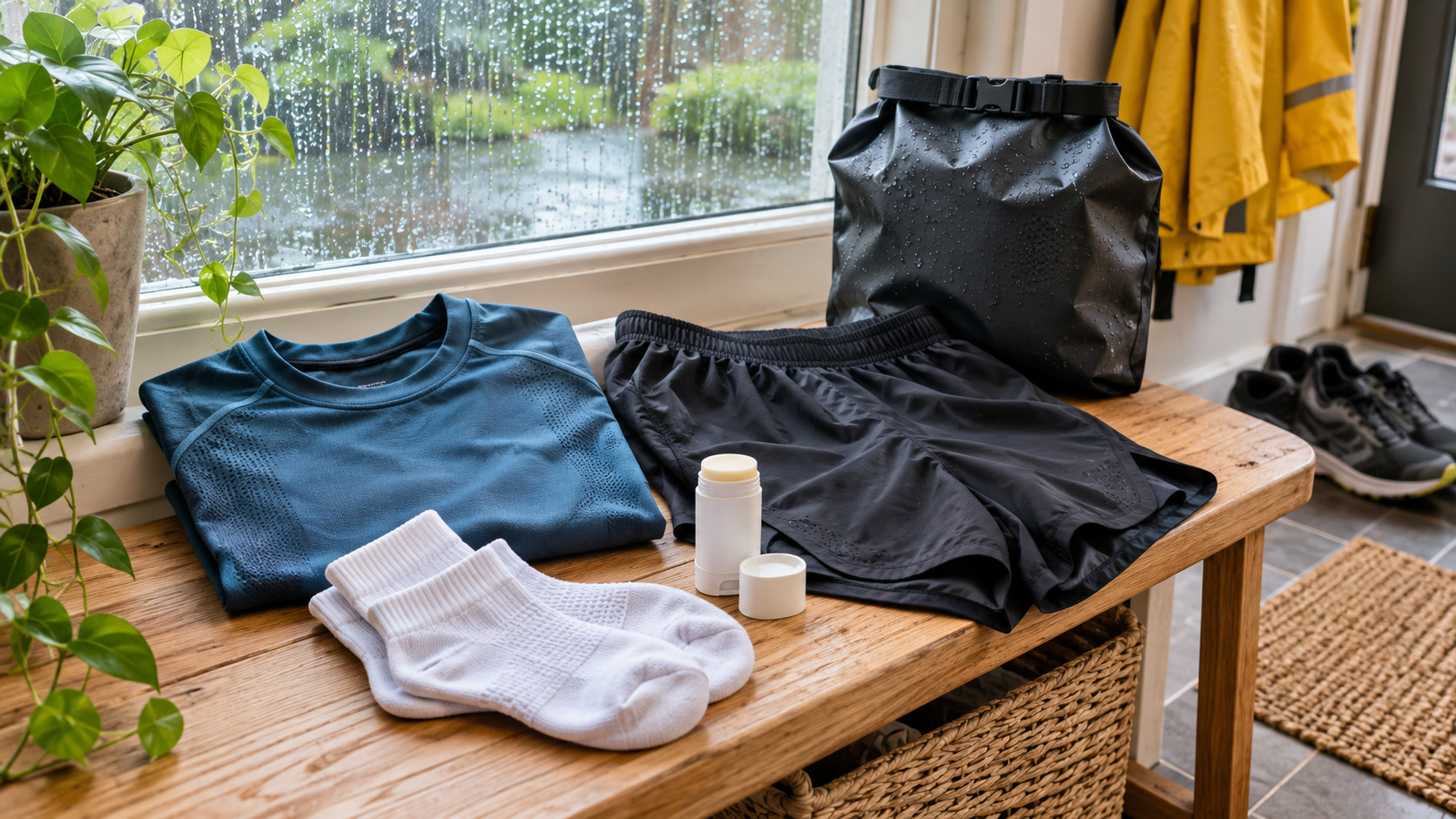
The featured image is an AI-generated editorial illustration. It is not a photograph of a real test, product or person.
Chafing is not solved by a single product. It happens when friction, moisture, movement and fabric seams combine for long enough. The practical goal is to change the variables you can test before a key run—not to keep running through broken skin.
Build a small pre-run system
- Choose a garment that does not bunch at the area that usually rubs.
- Use clean, dry socks and check that footwear does not let the foot slide more than usual.
- For rain, pack a dry top layer for after the run and put it in a waterproof bag.
- Test any lubricant or tape on a short run first; stop if it irritates your skin.
Use the run log to find the pattern
Record duration, rain or humidity, garment, wash cycle, pack movement and the exact area affected. This helps distinguish a one-off wet run from a fit issue that is repeating. For a long race, rehearse the clothing and pack together; a product that works for an easy hour may move differently after fuel, sweat and rain accumulate.
When to stop self-managing
Open skin, spreading redness, warmth, drainage, fever, or pain that is getting worse should not be treated as a normal training nuisance. Pause the aggravating activity and seek appropriate medical advice, especially if infection is a concern. The NHS notes that persistent or infected skin problems need professional assessment.
Keep the decision proportional
A little prevention is sensible; a universal “best” anti-chafe product is not. Avoid unfamiliar gear immediately before a marathon, and keep the rest of the race-day routine stable. For a broader cold/wet clothing decision, see our layering decision guide.
コメント