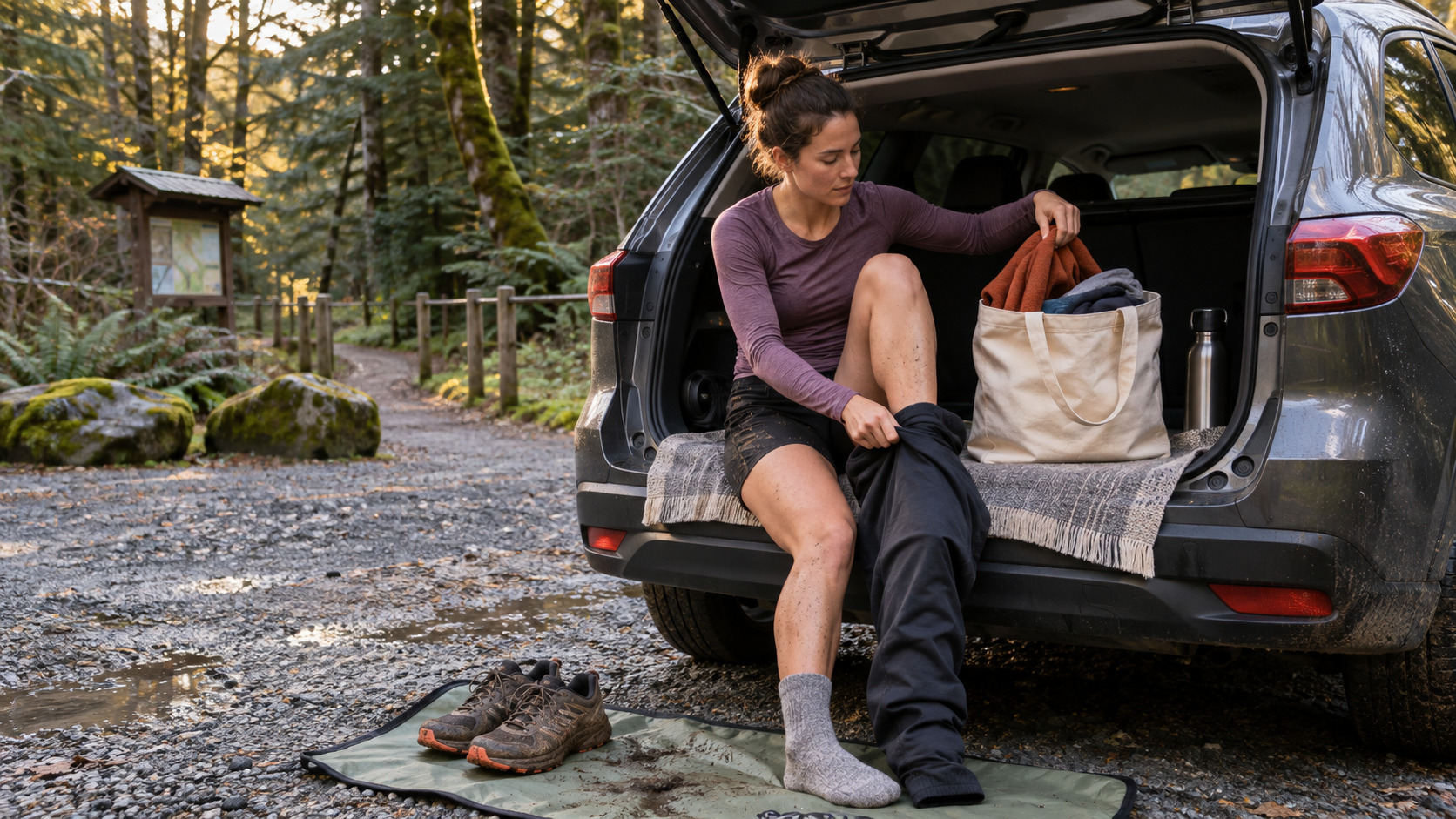
A return-to-car kit will not make a risky run safe, but it can prevent a common problem: staying in wet clothes while you pack, wait for a friend, or begin a long drive. The useful version is a small, repeatable system that separates dry layers, wet footwear and food.
Build it around the first ten minutes
Ask what happens after you stop moving. In cool or windy weather, a sweat-soaked top can feel much colder once effort ends. The National Weather Service explains that wind chill increases heat loss from exposed skin; the actual trail forecast should guide whether you shorten or cancel a run.
- a dry base layer and warm top in a sealed bag;
- dry socks and easy footwear;
- a small towel or changing poncho;
- a waterproof bag for muddy shoes and wet layers;
- water and a snack you know you tolerate.
Keep dry clothing separate from the wet-clothing bag. That separation matters more than adding many extras.
Use it as a decision tool, not a substitute for planning
If you finish shivering, confused, unusually clumsy, or unable to warm up, prioritize warmth and appropriate help. A car can be far from the point where conditions change, so the primary plan remains a conservative route, turnaround time and suitable layers. Our wet-and-windy trail plan explains why stops change the equation.
Keep the system usable
Restock after every run: remove food that does not tolerate heat, dry wet items, and check that the spare layers fit the season. In freezing conditions, do not leave liquids or electronics in the car overnight. Each runner still needs to carry what they need during the run; the kit belongs at the end of the plan, not in the middle.
The featured image is an AI-generated usage illustration, not a photograph of a runner, product or trailhead.

コメント