Arriving at altitude with fresh legs can make a route look easier than it will feel. For a runner coming from low elevation, the first day is not the time to prove fitness: it is the time to create options. Choose a short, reversible route, set a turnaround point before starting, and make it easy to descend or stop.
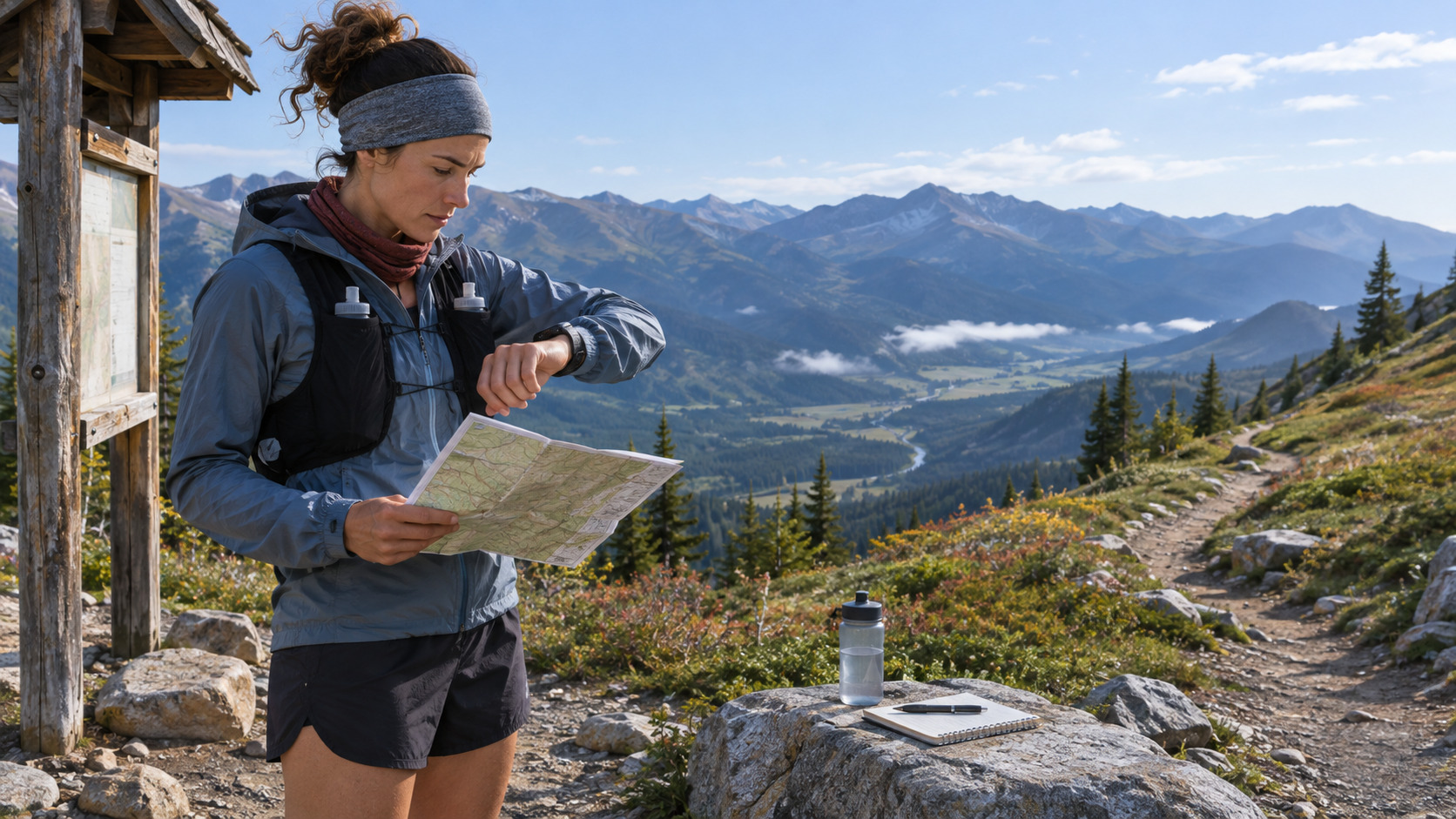
Start with the right frame: altitude response is individual
The Wilderness Medical Society (WMS) notes that acute altitude illness can occur after ascent, often above 2,500 m, and that individual response varies. Symptoms can include headache, poor appetite, nausea, fatigue, light-headedness or dizziness. A watch, pace, or normal sea-level race result cannot rule those symptoms out. Use how you feel and function—not a pace target—as the first-day governor.
Make the first outing intentionally small
- Choose a loop or out-and-back: avoid committing to a ridge, remote descent or one-way shuttle route.
- Keep intensity conversational: hiking steep grades is a sensible option; skip intervals and hard downhill work.
- Set a time turnaround: turn before conditions, weather or daylight make descent harder.
- Carry the full exit plan: offline map, charged phone, layers, water, food and a way to tell someone your route.
What should stop the run?
New or worsening headache with other symptoms after ascent deserves a conservative response. Stop increasing elevation and reassess. Trouble walking normally, confusion, shortness of breath that is markedly out of proportion to effort, persistent symptoms, chest symptoms, or a rapidly worsening condition are not problems to solve by pushing through a workout. Descend and seek urgent local medical advice or emergency help as appropriate. This is planning guidance, not a diagnosis.
Do not use hydration, caffeine or toughness as a substitute for acclimatization
Food and fluids matter for an ordinary run, but they do not make a rapid ascent risk-free. Similarly, medication decisions need clinician-specific guidance; do not use an article as a dosing plan. If the trip also crosses time zones, keep the route conservative while you manage sleep and travel fatigue—see our east-versus-west travel planning worksheet.
A practical first-day template
- Before leaving: check the route, weather, bailout points and who knows your plan.
- During: stay easy, watch for symptoms, and keep a preset turnaround.
- After: note effort, sleep, appetite and symptoms before deciding whether to add distance or vertical the next day.
Primary source
Wilderness Medical Society: 2024 Altitude Summary (summary of the 2024 clinical practice guideline).


コメント