A headlamp extends the day, but it does not make every trail a night-running route. The safer plan begins before sunset: select a familiar, legal route with simple exits, test your light system at home, and set a turnaround that preserves an unhurried return.
Use light as a system, not a single device
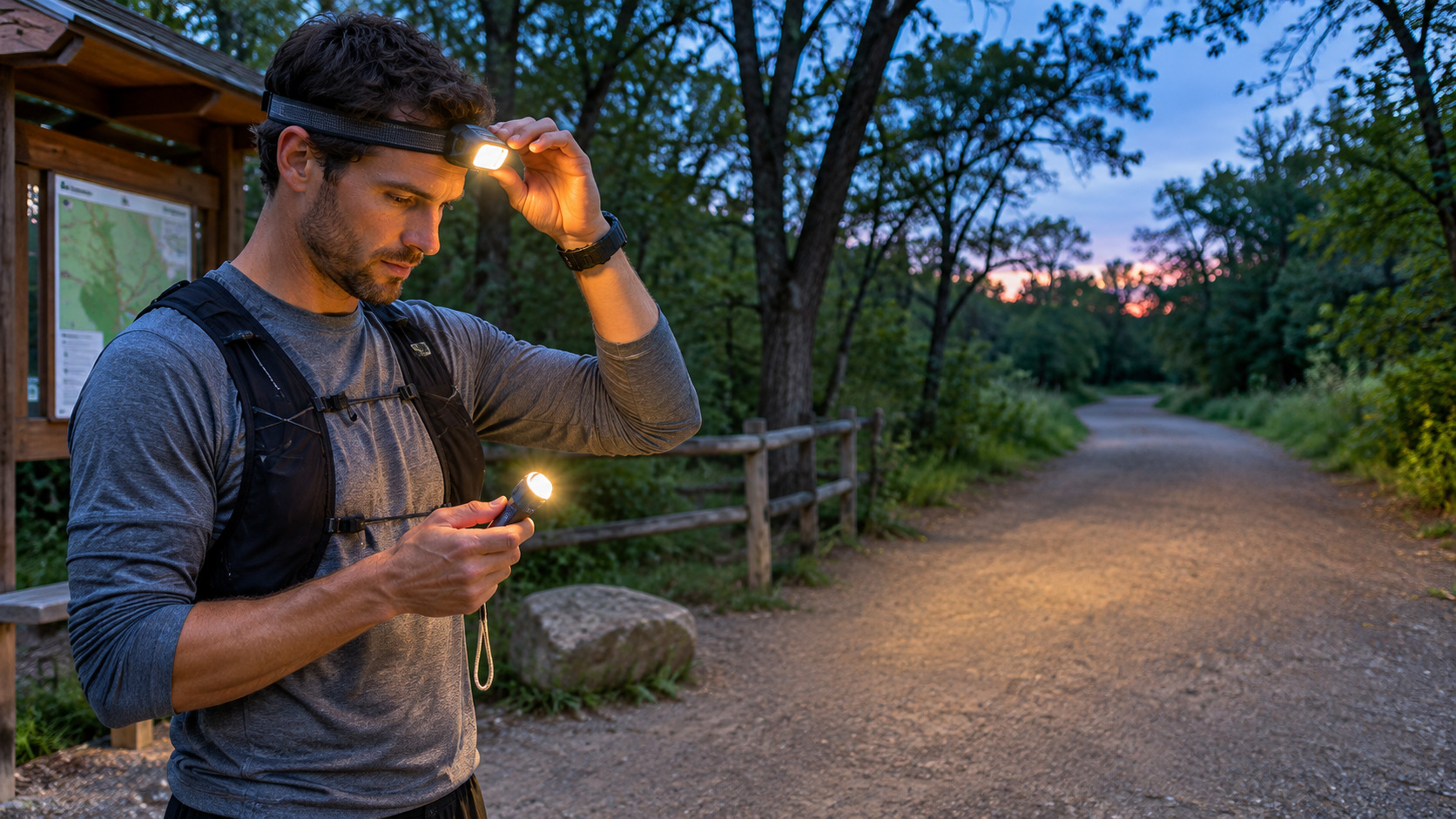
The U.S. National Park Service recommends carrying a headlamp rather than relying on a phone flashlight, and packing extra batteries. For a run, translate that into a simple system: a primary headlamp, a tested backup light or power option, and enough runtime for the route plus a margin. Confirm how the lamp changes output as the battery falls, and carry it where you can access it without emptying your vest.
Choose the route for the exit, not the scenery
First night runs work best on routes you already know in daylight: clear footing, few complex junctions, predictable access, and a short return option. Avoid adding unfamiliar technical descent, stream crossings, exposed ridges or a new wildlife area simply because the distance looks manageable. Check local park hours, closures and headlamp rules before leaving.
Write a turnaround plan before the start
- Set the latest time to leave the farthest point.
- Choose an earlier turn point if fog, rain, fatigue or route-finding slows you down.
- Share the route, expected return and a check-in plan with someone not on the run.
- Carry a charged phone and offline navigation; a route file is a backup, not the plan.
Run for shared-trail conditions
At night, other users may not see or hear you early. Slow down at blind corners, announce yourself calmly when passing, and yield according to local rules. Our shared-trail passing guide has a daylight-to-dark checklist. If weather is building, avoid turning a night run into a storm decision: NWS advises getting into a substantial building or hard-topped vehicle when thunder is heard, rather than remaining outside.
Skip the run when the margin is gone
Start earlier, use a lit road route where appropriate and legal, or postpone if batteries are untested, weather is uncertain, the trail is closed, or you cannot name an easy exit. Finishing a little undertrained is preferable to finishing with a navigation, fall or exposure problem.
Primary sources
National Park Service: Hiking Safety; National Park Service: After-dark safety; National Weather Service lightning guidance.

コメント