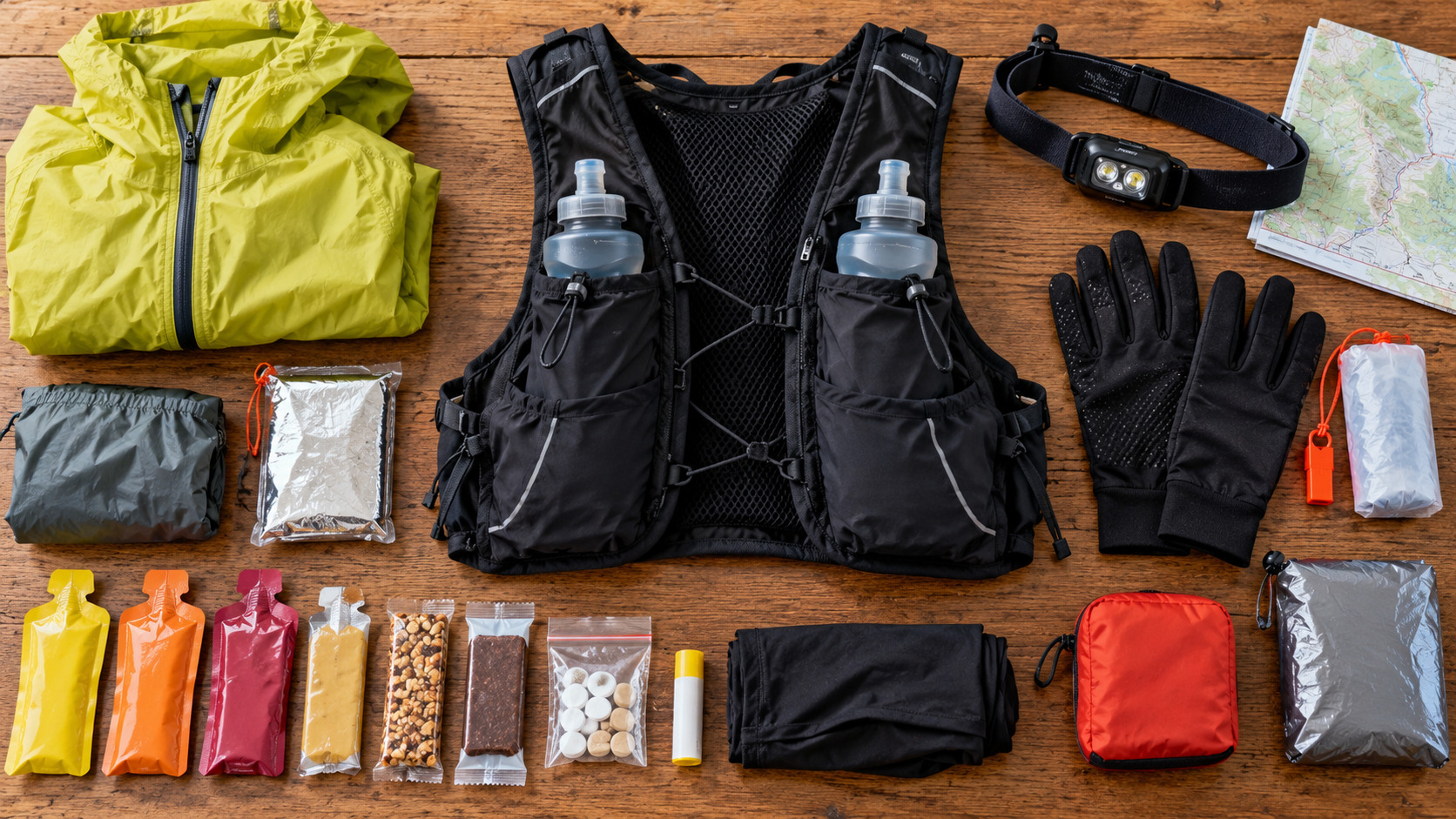
An aid-station reset kit is not a list of every item you own. It is a repeatable way to leave each station with the equipment your race rules and the next section demand. Build it around the organiser’s current mandatory-equipment list first, then add nutrition, fluids, weather layers, and a small number of personal contingencies.
Start with the race rules, not an internet checklist
Mandatory kit changes by course, season, weather alert, and race organisation. Some UTMB World Series event regulations, for example, specify that mandatory equipment must stay in the running pack for the whole race and list closed-toe trail shoes among required items. That is an example, not a transferable rule for every event. Download the current rulebook for your race and use its exact wording.
Build a reset card for each station
| Category | Question before leaving | Common error |
|---|---|---|
| Mandatory kit | Is every required item present and functional? | Moving a required item into a drop bag |
| Water | How much fluid is needed before the next reliable source? | Filling by habit rather than the next section |
| Fuel | What will be eaten before the next aid station? | Taking unfamiliar food when appetite is low |
| Weather | What changed on the course and in the forecast? | Leaving a warm layer behind after a warm valley |
| Light and power | Will darkness or delay make the next section a night section? | Assuming the planned sunset split will hold |
Keep the pack layout stable
Place items by access priority. Fluids and the next hour of nutrition belong where they can be reached while moving. A rain shell, emergency layer, and mandatory backup light need a fixed location that works in the dark. Do not rely on a volunteer or crew member to remember the location: label your own process with a short written reset card.
Use two versions of the checklist
Make one card for the runner and one for the crew. The runner card should be short enough to read while tired: water, calories, shell, light, phone, mandatory items. The crew card can include resupply quantities, planned shoe change, and decision points. Both cards should state that the runner has the final say and that the official rules control.
Test the system in training
Run a long outing with the same vest, soft flasks, weather layer, headlamp, and food wrappers. Then empty and repack the kit while tired. The aim is not to imitate race drama; it is to find the friction points—zips that do not close, batteries that are hard to reach, food that leaks, or a vest that changes fit when fully loaded.
Safety note
A reset kit does not replace navigation, weather judgement, communication planning, or a decision to stop when conditions exceed your ability. Follow the organiser’s latest instructions and any on-course safety direction. For night sections, pair the kit with a written light-and-spare plan rather than only a brightness rating.
Source and bottom line
Use the official event rules as the controlling source; one published UTMB event regulation illustrates why mandatory gear must remain race-specific. A stable reset routine reduces forgotten items, but it cannot make an unplanned weather or medical risk disappear.


コメント