For an overnight ultra, a sleep plan is not a promise to stay awake. It is a way to notice when judgement is deteriorating and to decide in advance what to do. The most useful starting point is normal sleep before the event, a simple crew communication plan, and a defined response to unsafe sleepiness—not deliberately depriving yourself in training.
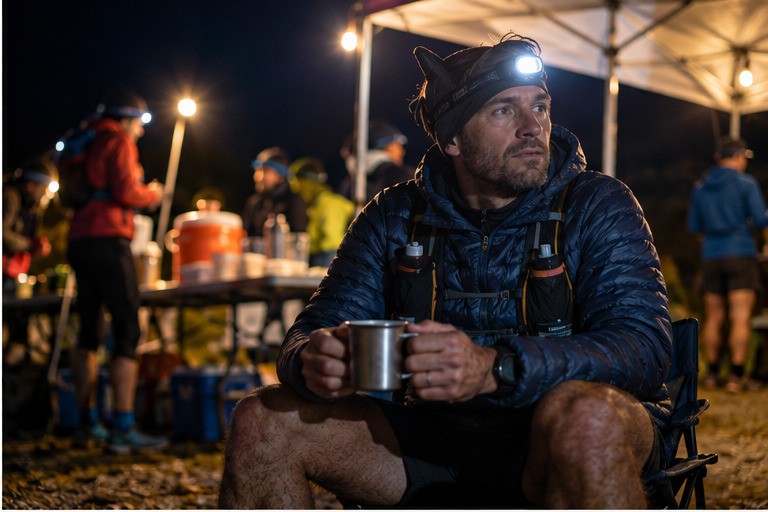
What the evidence can and cannot say
A 2026 systematic review of ultra-endurance athletes found associations between sleep measures and physical or cognitive outcomes, but the evidence was heterogeneous and often observational. Pre-race sleep quality and planned naps may be helpful in some settings; that does not make an all-night race a controlled experiment or create a universal nap duration. Individual history, race duration, altitude, weather, caffeine use and crew support change the decision.
Write three checkpoints before race day
| Checkpoint | Question | Pre-decided response |
|---|---|---|
| Before the start | Have travel and logistics cut sleep? | Lower pacing expectations; tell crew |
| First night section | Can you navigate and fuel reliably? | Slow down, eat/drink, use a safe pause |
| Repeated sleepiness | Are you confused, weaving or missing route cues? | Stop and seek event medical/crew support |
Do not use caffeine as a substitute for judgement
Caffeine can be part of a familiar race plan, but it cannot reliably correct impaired decisions. Never test a new dose during an overnight event. If you are struggling to keep your eyes open, are hallucinating, repeatedly miss route markings, or cannot manage basic nutrition, treat that as a safety issue rather than a toughness test. Follow the event’s safety procedures and consult medical staff where available.
Practise logistics, not sleep deprivation
A short, controlled evening run can help rehearse headlamp controls, clothing layers and navigation, but it is not evidence that you should intentionally arrive sleep-deprived. Your night kit must be accessible; a vest with excess capacity still needs to be packed so the light, warm layer and calories are easy to find. For hydration planning, use our aid-station hydration framework.
Bottom line
Protect sleep in the lead-up, plan decision checkpoints, and make it easy to ask for help. A conservative response to deteriorating attention is a sound race skill, not a failure.
Sources
2026 systematic review of sleep in ultra-endurance athletes · Sleep and ultramarathon finisher study


コメント