The best race shoe is usually not the newest one. It is the pair whose fit, lacing and behaviour you understand at race effort. Make the decision early enough to solve a problem, but late enough to check the forecast and course condition.
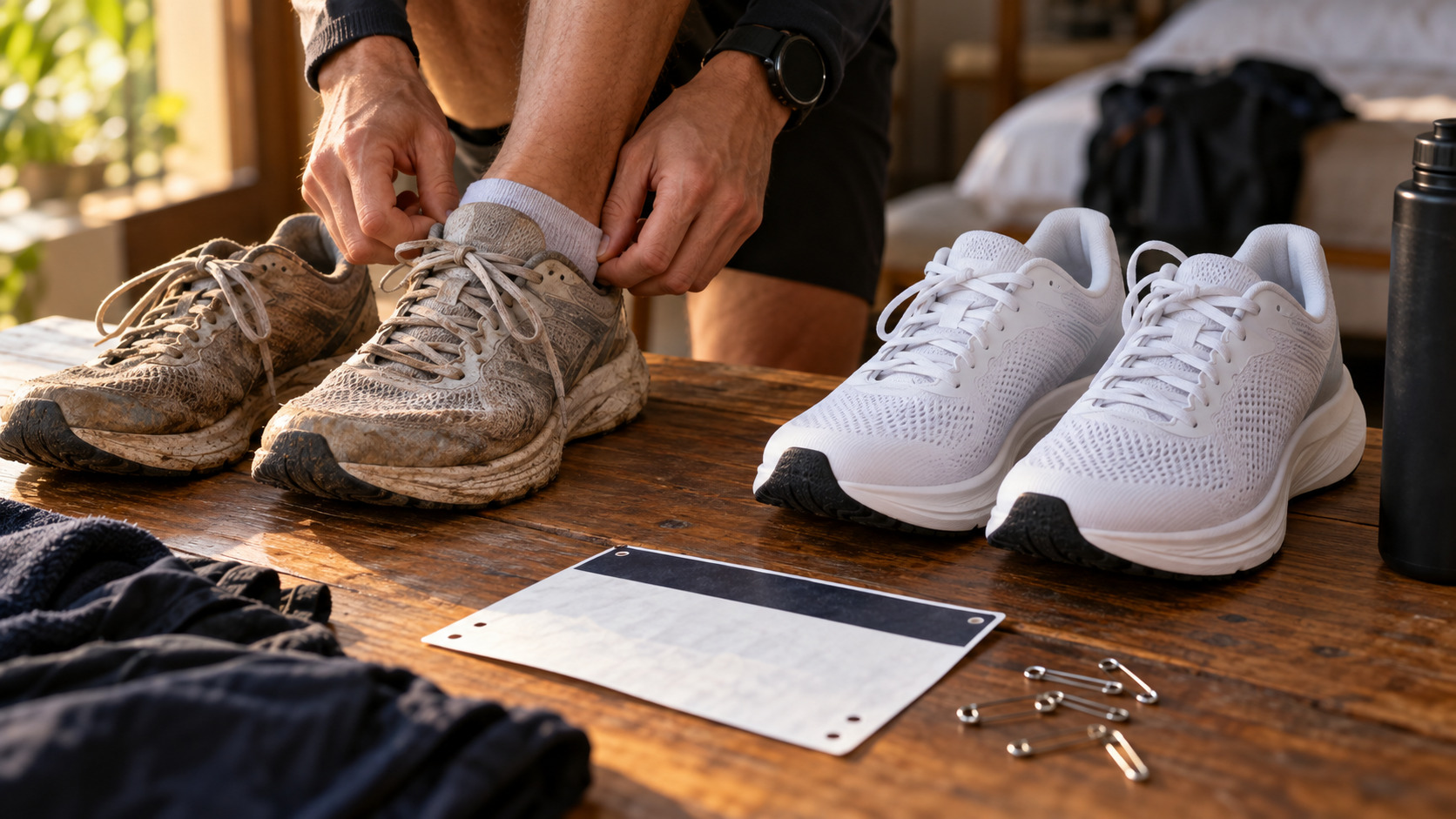

The four checks that matter
| Check | Question | Red flag |
|---|---|---|
| Fit | Have you run long enough to know toe and heel response? | New hotspot or numbness |
| Course | Does the outsole match wet paths, road or loose trail? | Choosing by looks alone |
| Fuel and socks | Have you used the exact sock/lacing combination? | Changing both on race morning |
| Wear | Is the midsole/outsole still intact and familiar? | Visible damage or a sudden feel change |
A simple race-week timeline
Seven days out, select the primary pair and a weather-appropriate backup. Three to four days out, take the primary pair for a short easy run with race socks. The day before, clean mud, check laces and pack both pairs if travel or weather creates uncertainty. Do not introduce a new model in a final hard session.
Carbon, trail and familiar shoes
A plated road shoe can be a sound choice only if you have already used it at the intended pace and duration. On technical trail, foot security and traction may matter more than a road-race sensation. If your feet swell on long runs, a familiar fit with enough forefoot room is more useful than a theoretical weight saving.
After the choice
Use the freed-up attention for pacing and logistics. If the route includes long climbs, pair your shoe plan with a power-hiking decision rule instead of trying to solve every problem through footwear.
Bottom line
Choose the shoe you have tested in conditions closest to race day. The safest upgrade in race week is clarity, not novelty.


コメント