Caffeine can be useful in endurance racing, but the best race plan is not “take as much as tolerated.” It is a dose and timing plan tested in ordinary training, with a clear stop rule for sleep disruption, anxiety, gut upset or palpitations.
The short answer: research most consistently supports 3–6 mg per kg of body mass for performance, while some people respond to less. Do not turn that range into a target to chase on race day.
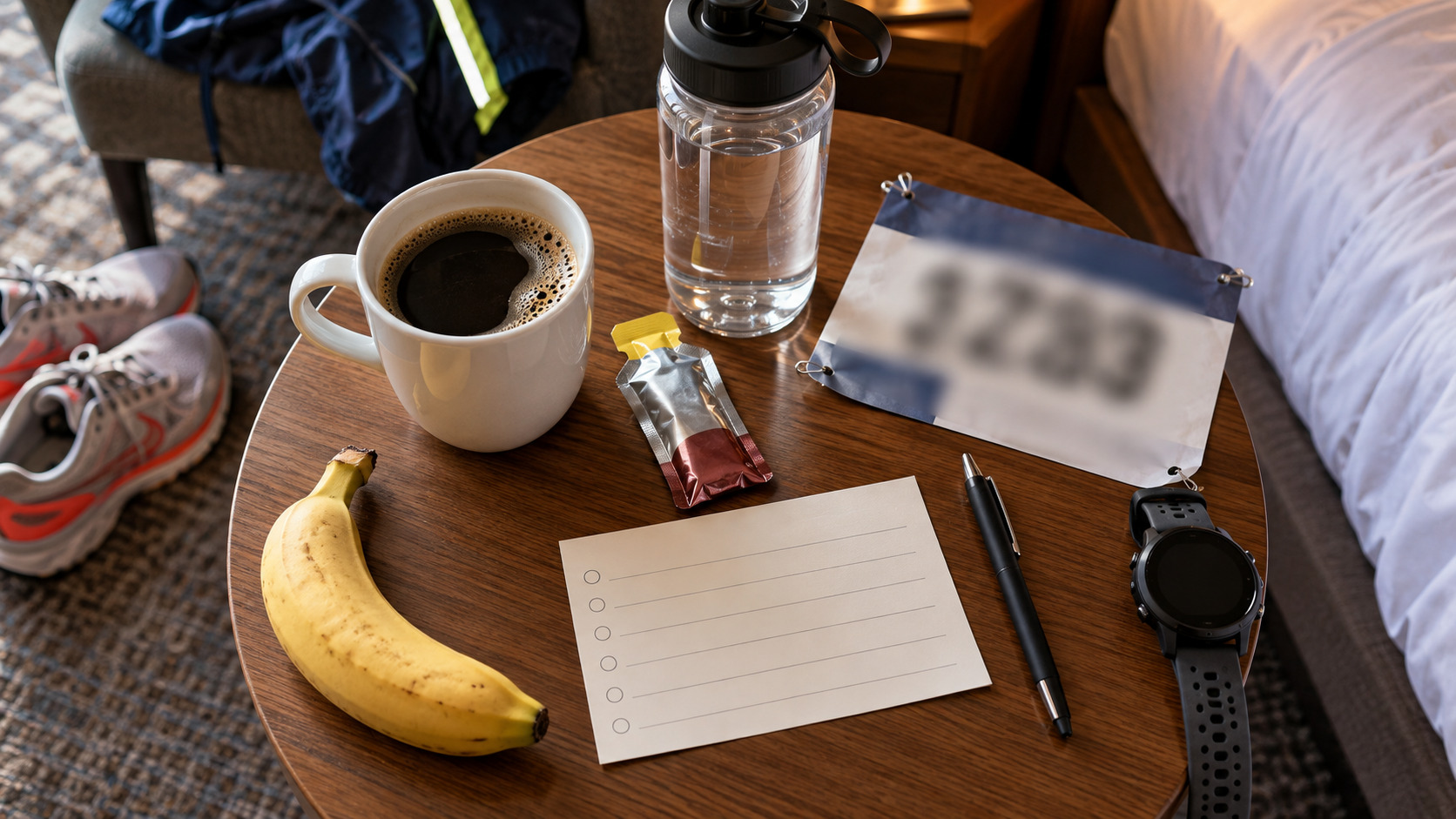
Start with the arithmetic, not a gel count
For a 60 kg runner, 2 mg/kg is 120 mg and 3 mg/kg is 180 mg. For a 75 kg runner, they are 150 mg and 225 mg. Add every source: coffee, gels, chews, cola, energy drinks and tablets. A race plan that lists products but not total milligrams is difficult to audit.
| Body mass | 2 mg/kg | 3 mg/kg |
|---|---|---|
| 60 kg | 120 mg | 180 mg |
| 75 kg | 150 mg | 225 mg |
Timing changes with the source
The ISSN position stand notes that 60 minutes before exercise is common for caffeine, while the optimal timing depends on the source. A capsule, coffee and caffeinated gum should not be treated as interchangeable. Keep the trial specific: same product form, similar pre-race meal and a run long enough to expose sleep and gut effects.
A conservative testing sequence
- Use a familiar low-to-moderate amount on an easy-to-moderate session.
- Record dose, time, perceived benefit, gut symptoms, anxiety and sleep that night.
- Only then test a late-race top-up during a key long run.
- On race day, stay with the version that worked—not a higher dose because the race matters more.
When to skip the experiment
Do not use a race to test caffeine when you are ill, sleep-deprived, dehydrated, prone to panic symptoms, or have been advised to limit stimulants. Discuss individualized questions, medical conditions and medications with an appropriate clinician or pharmacist. Caffeine is not a replacement for carbohydrate, hydration or sensible heat management.
Bottom line
Caffeine is most useful when it is counted, tested and bounded. Calculate the total milligrams, choose the form and timing you have rehearsed, and retain the option to skip it. For Japanese readers, our caffeine dose calculation guide provides a separate Japanese-language example.
Source
International Society of Sports Nutrition position stand: caffeine and exercise performance.


コメント