Editorial disclosure: This is a non-hands-on review. We have not worn or field-tested the Osprey Duro 6. It interprets manufacturer-published specifications and features for a trail-running purchase decision; fit, bounce, durability and availability must be checked in person with the gear you will carry.
What Osprey publishes
Osprey describes the Duro 6 as a 6-litre running vest with two included 500 ml Hydraulics soft flasks. Its UK product page lists a 1.5 L reservoir as compatible but not included, plus stretch food pockets, zippered rear compartments, a shove-it pocket and front pole carry. Published vest weight varies by size, so compare the figure for your chosen size and whether it includes flasks before treating it as total carried weight.
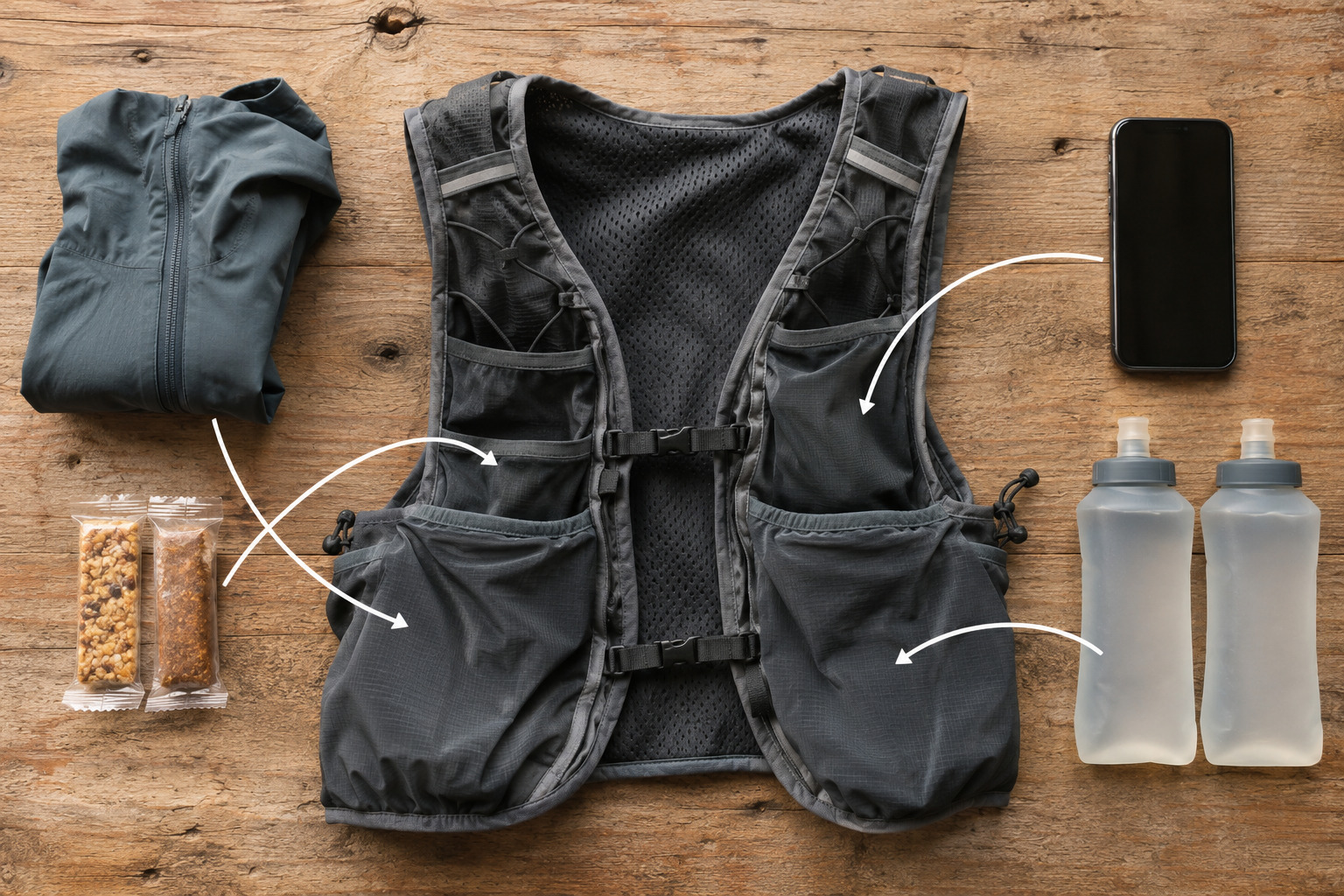
Translate the layout into a route plan
Two front flasks put 1 litre immediately available. That is not a hydration prescription: the water you need depends on temperature, pace, individual sweat loss and reliable refill points. A reservoir may increase carrying options, but it also changes access and weight distribution. Put the actual items for your route—shell, phone, emergency layer, food, map and required safety items—on the floor before deciding that 6 litres is enough.
Questions to answer before buying
- Fit with load: can you breathe and reach the front pockets with both flasks full?
- Mandatory gear: does the route or race require a larger waterproof layer, headlamp, whistle or poles?
- Refill workflow: can you refill, clean and re-pack the system without holding up a checkpoint?
- Regional support: is this exact current version, size and warranty offered by your local authorised seller?
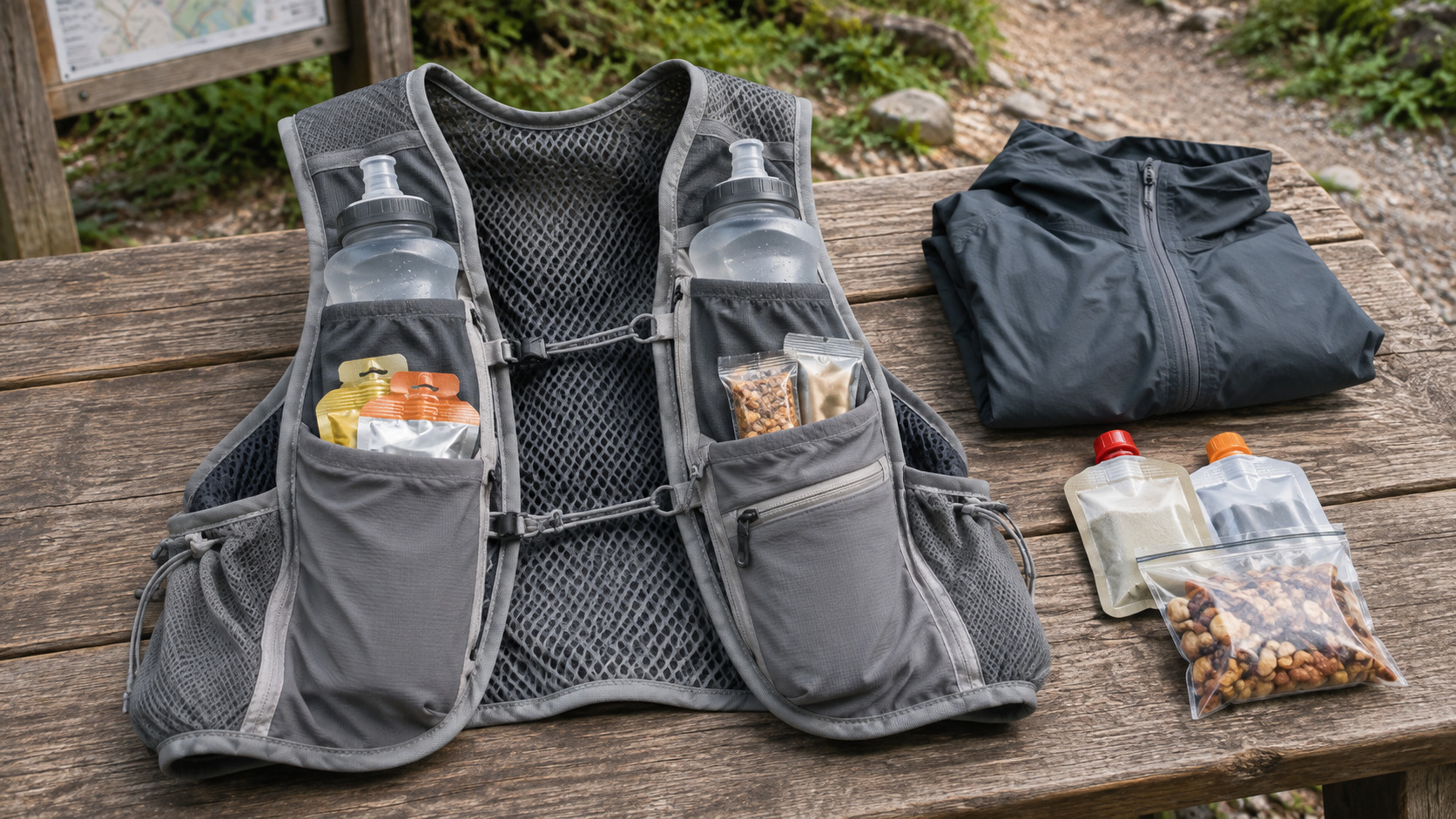
The image above is an AI-generated generic packing concept, not a photograph of the Duro 6 and not proof of its capacity or performance. There are no affiliate links in this review.
Who should compare alternatives
Consider another capacity if your days routinely require more insulation, self-supported water, overnight gear or a large mandatory kit. Compare included flasks, reservoir compatibility, pole carry, size range and return policy rather than assuming that similarly named vests fit the same way. A vest is a good candidate only if it can carry the real load without compromising breathing or movement.
For planning fluids independent of any vest, see our ultra-trail hydration planning guide.

コメント