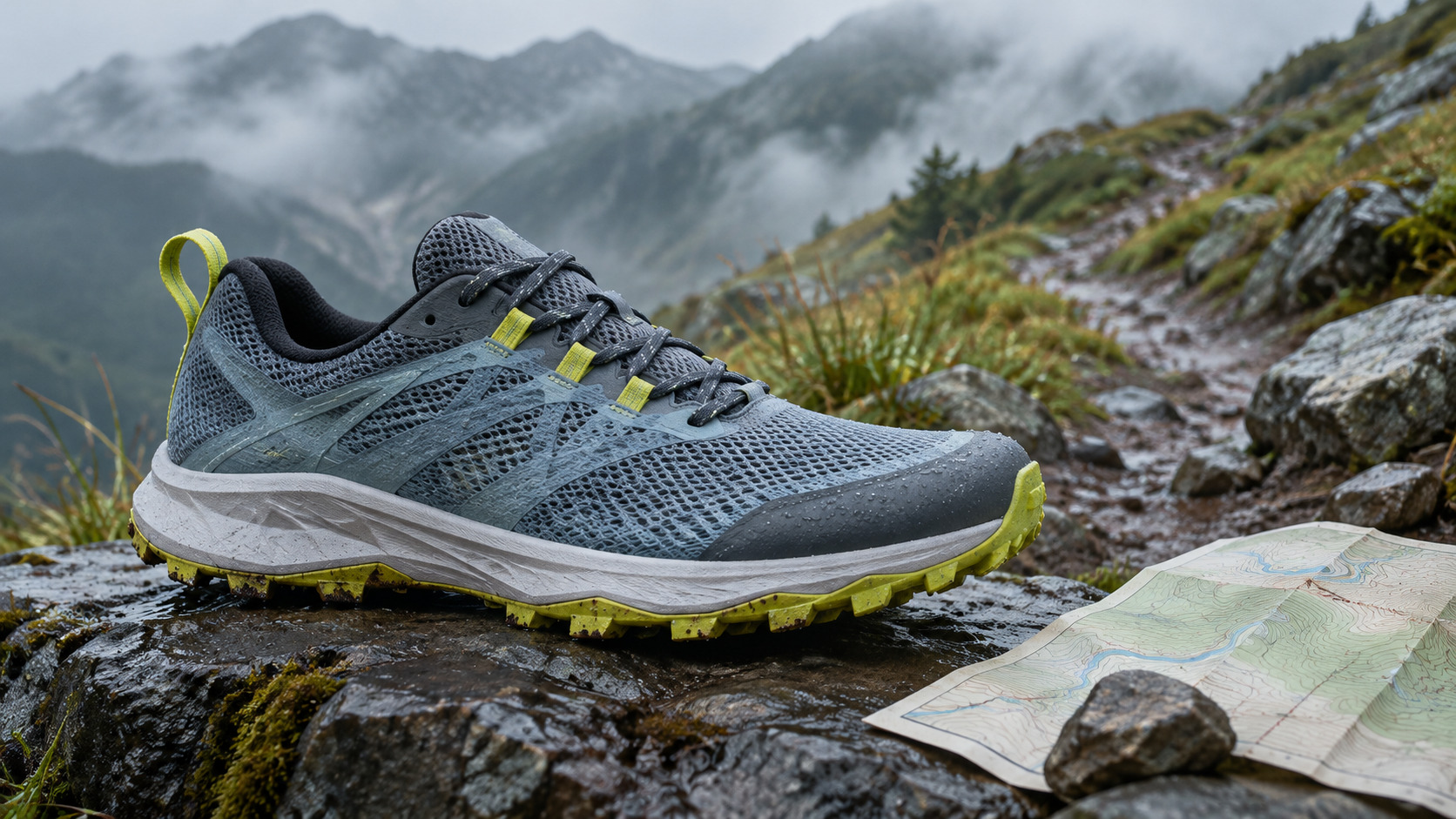
Editorial disclosure: This is a non-hands-on buyer’s guide based on NNormal’s published specifications and public information. We have not tested the NNormal Kjerag 02. The image is an AI-generated generic trail-shoe illustration, not a product photograph or evidence of fit, grip, durability or performance.
The NNormal Kjerag 02 is a specification-led option for runners considering a light shoe for technical terrain. The useful question is not whether the listed weight is impressive in isolation; it is whether the stack, drop, fit and lug design match your feet, route and time on the move.
What the official specifications say
NNormal lists the Kjerag 02 at 230 g in UK 8.5 / EU 42⅔, with a 6 mm drop, 20/26 mm stack, 3.5 mm lug profile, a Matryx Light Jacquard upper, EExpure TPEE supercritical-foam midsole and Vibram Megagrip Litebase outsole. It also lists no insole and a medium fit with a roomy toe box. These are manufacturer claims and a single stated size, not universal measurements.
How to translate that into a purchase check
- Fit first: A stated roomy toe box does not predict your heel hold, instep pressure or swelling room. Try the intended sock and downhill fit if possible.
- Terrain second: Lug depth and outsole name do not replace a wet-rock or mud assessment for your own terrain. Keep speed conservative until you know the shoe.
- Load and duration third: A light shoe can be appealing for fast routes, but your tolerance for the stated stack and midsole feel is individual. Do not make race day the first long test.
- Compare like for like: Compare the same size, version and region. Availability, colourways, price and warranty vary by market.
Who it may suit—and who should pause
It may merit a closer look for an experienced trail runner seeking a low-mass shoe with a moderate drop and a stated technical-terrain focus. It deserves more careful fitting for anyone who needs a very specific orthotic/insole setup, a different fit volume, or a shoe to solve an injury problem. No specification sheet can establish comfort or injury prevention.
For a replacement decision after real use, see When to Replace Trail Running Shoes.
Before you buy
Check the official product page for your region, confirm the exact version and return policy, and test fit on a clean indoor surface where returns are allowed. Do not treat the AI image in this article as a representation of the actual product.
コメント