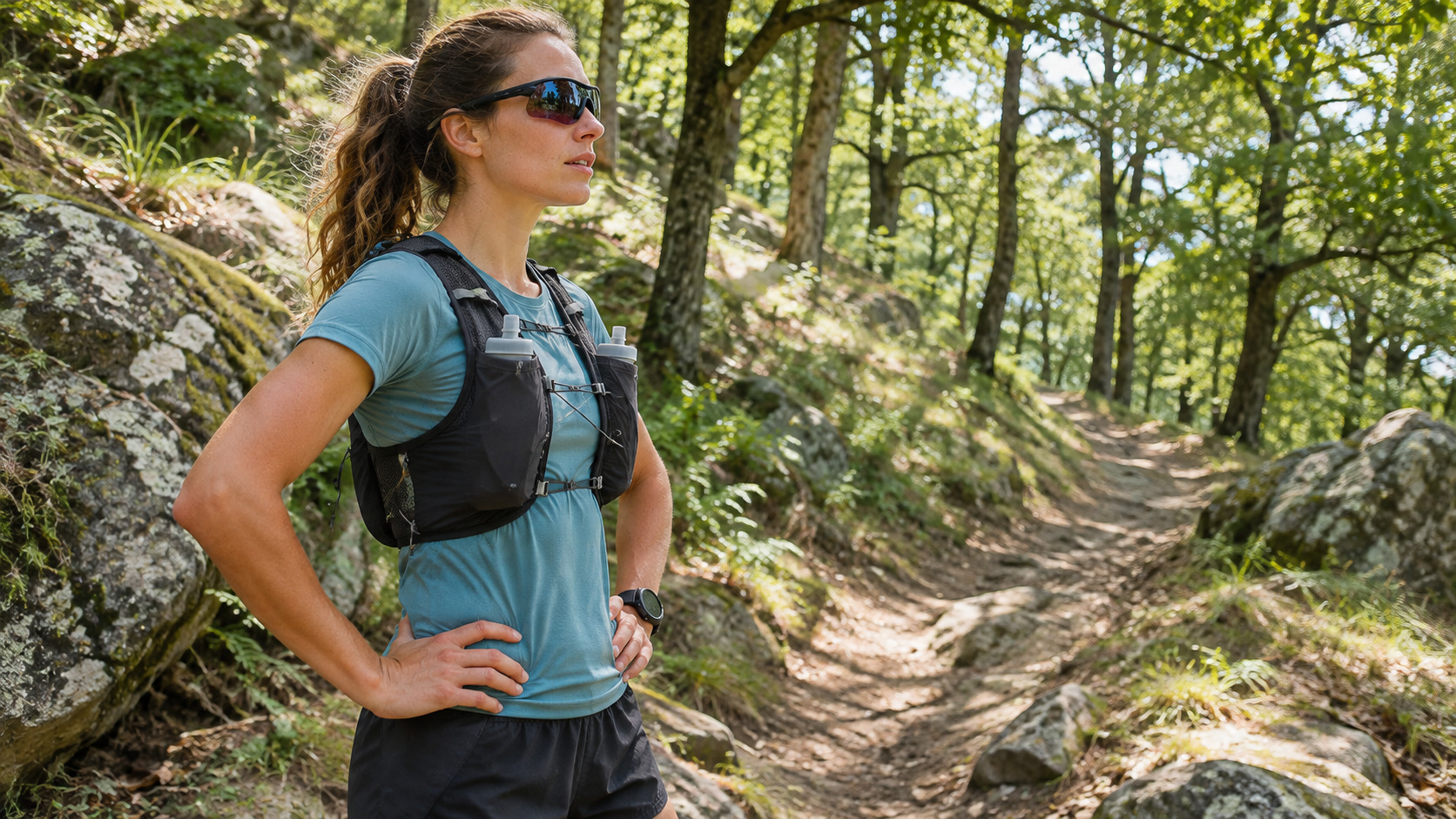
A trail-running lens can make bright ground easier to read, but the first job of sunglasses is protection and stable fit. For a practical buying decision, start with UV coverage, frame coverage and retention. Lens tint, mirror finish and marketing names come after those basics.
Look for stated UV-A and UV-B protection
The American Optometric Association recommends sunglasses that block 100% of UV-A and UV-B radiation. That is a clearer starting point than a dark lens: darkness alone does not verify UV protection. If a product listing does not state the protection, ask the seller or choose one that does.
Coverage and material matter on a trail
Wraparound frames can reduce light entering from the sides in bright, open terrain. For outdoor sports with eye-hazard exposure, the AOA notes that polycarbonate or Trivex lenses offer higher impact resistance. That is not a guarantee against injury, and ordinary sunglasses are not a substitute for task-specific protective eyewear where that is required. Branches, stones and falls still call for pace and route choices that leave a margin.
Do a movement test before race day
- Jog downhill, look over each shoulder and tilt your head: the frame should not slide or bounce.
- Check whether lashes touch the lens and whether the frame blocks your upward view.
- Try the glasses with your hat, headlamp strap and the collar you will actually wear.
- Carry a clear or low-light alternative when the route may finish after dark; do not keep dark lenses on simply because they are expensive.
Fogging is a fit-and-conditions problem as much as a ventilation claim. A lens that works in dry air may fog during a damp climb. Test it on an ordinary run where you can remove it safely.
Lens color is a personal, conditional choice
There is no universal trail tint. Use a lens that leaves you able to read roots, wet rock and trail markers in the actual light you expect. If color perception or glare gives you concern, an eye-care professional can help with a choice suited to your eyes and prescription needs.
This is part of a wider safety system: keep communication with other trail users clear, as outlined in our shared-trail etiquette guide.

コメント