Images in this article are AI-generated editorial illustrations, not evidence of a hands-on test.
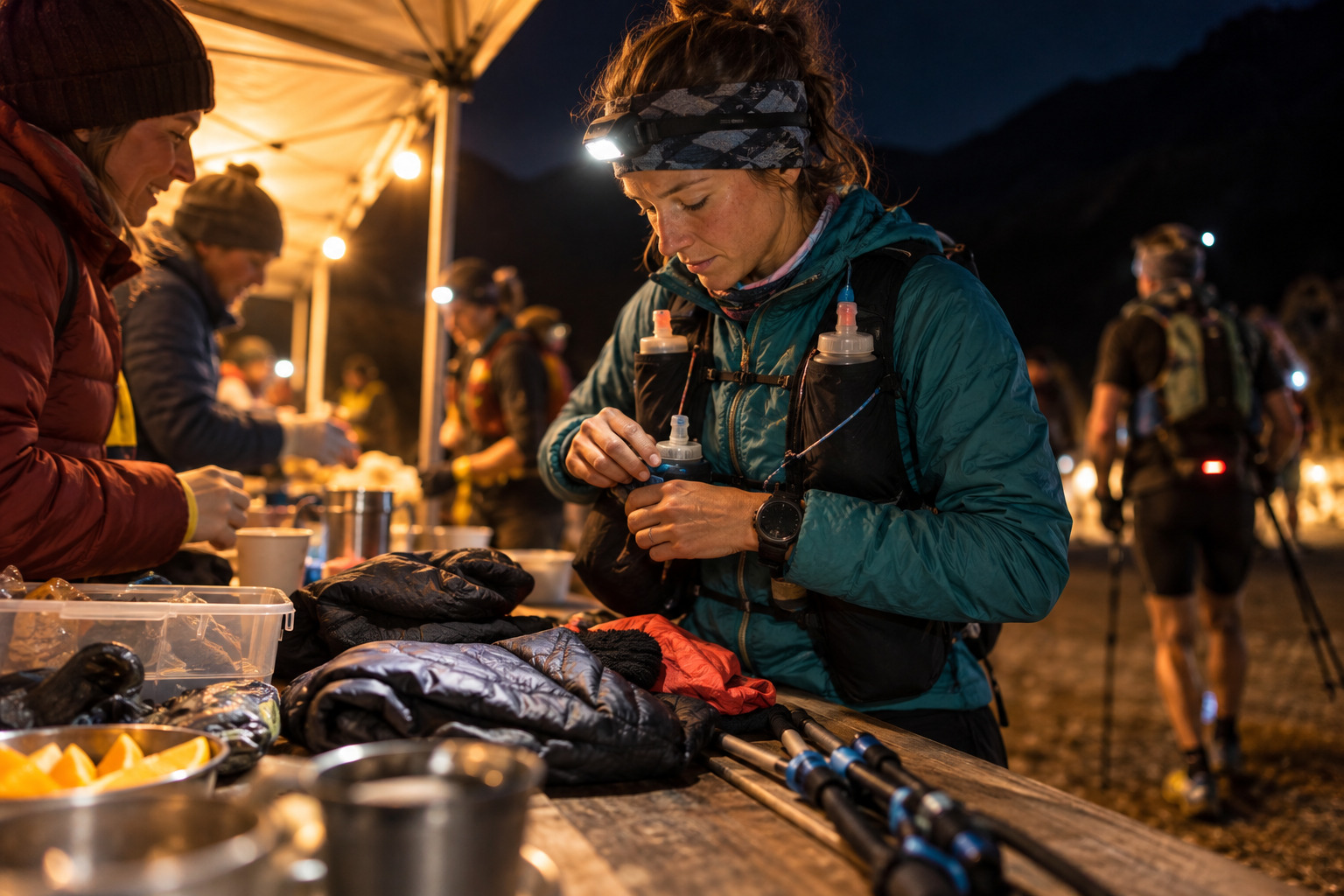
Lightning safety for trail runners is decided before the storm, not by a last-minute sprint off a ridge. If thunder is possible, the plan needs a turnaround time, a lower-risk route and a genuinely safe destination—not merely a tarp, tent or trailhead sign.
What to decide at home
Check the local forecast, note when exposed ground begins, and choose a time that gets you away from ridges before storms are expected. The National Weather Service is clear: no place outdoors is safe when a thunderstorm is in the area. A substantial enclosed building or hard-topped vehicle is the target.
On the route: use an early trigger
Hearing thunder means it is time to stop the activity and move to safe shelter. Do not wait for rain above you; lightning can occur away from the precipitation core. Descending from a ridge before a storm is far safer than reacting after exposure has already risen.
What not to rely on
- A small shelter, open vehicle or tent is not a safe lightning shelter.
- Crouching outdoors does not make an exposed runner safe.
- A GPS watch, phone or satellite messenger can support communication but cannot make outdoor terrain safe.
Return only after the threat has passed
The NWS recommends waiting 30 minutes after the last thunder before resuming outdoor activity. If the plan cannot meet that standard, change the route or postpone. Pair this with a clear turnaround decision framework before your next run.


コメント